
Everything You Need to Know About CGT Forecasting for ASX Portfolios
Master CGT forecasting for ASX portfolios. Learn parcel-level tax outcomes, wash sales, tax-loss harvesting, and accountant-ready reporting strategies.

Understand Australian tax concepts that affect shares, ETFs and portfolio rebalancing. This section covers capital gains tax, the CGT discount, tax lots, cost base records, capital losses, franking credits, ETF distributions and AMIT cost-base adjustments. The guides explain what information to keep, which dates matter and how a sale can produce different tax outcomes depending on the parcel identified. You can use the CGT calculator to estimate a scenario and the tax-lot guides to understand the records behind it. Estimates are not a tax return: brokerage, ownership structure, carried-forward losses, exemptions, income and other circumstances can change the final result. Tax rules and administrative guidance can also change, so check the article’s review date and follow the linked ATO source for the current position. Crowdfolio provides general factual information and portfolio modelling tools only. It does not provide tax advice. Confirm the treatment of your transactions with a registered tax agent, particularly where records are incomplete, an exemption may apply or an asset has undergone a corporate action.
Master CGT forecasting for ASX portfolios. Learn parcel-level tax outcomes, wash sales, tax-loss harvesting, and accountant-ready reporting strategies.
Learn how to execute tax-loss harvesting strategies using Crowdfolio's ASX portfolio tracker with step-by-step guidance on identifying losses and forecasting tax outcomes.

Essential CGT glossary for Australian ASX investors. Learn capital gains tax terms, FIFO/LIFO, wash sales, tax-loss harvesting, and more.

Master parcel-level lot selection for ASX shares. Learn FIFO, LIFO, and specific identification methods to optimize capital gains tax outcomes.
Learn how capital gains tax works for ASX investors. Understand CGT calculations, the 50% discount, timing strategies, and tax-loss harvesting for Australian share traders.
The CGT 6-year rule lets you keep treating a former home as your main residence for up to six years after you move out, while it is rented out — so the capital gain over that period can stay exempt from capital gains tax. It…
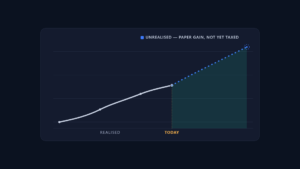
Does Australia tax unrealised capital gains? For ordinary share and ETF investors, no: CGT applies only when you sell. Here is what that means.

Tax steps for Australian share investors before 30 June: franking credit records, loss harvesting, parcel selection and super contributions.

Tax on ETF investments in Australia covers CGT, franking credits, FITOs and AMIT adjustments. Learn how to report each component correctly in myTax.

Australian budget tax changes explained for DIY investors. Understand CGT reforms, negative gearing updates, and super rules before the 2027 deadline hits.