
Telstra Dividend Yield ASX: Still Worth Holding?
Telstra dividend yield asx is ~4.21% headline (21 cps) or ~6.1% gross with 90–100% franking. For SMSF pension phase, franking credit refunds lift effective yield above 6%, beating term deposits at 4.5–5.2%. But dividend is below 28 cps peak, payout ratio exceeds earnings at 128.6%, and capital growth is minimal. It suits diversified income portfolios, not a sole anchor.
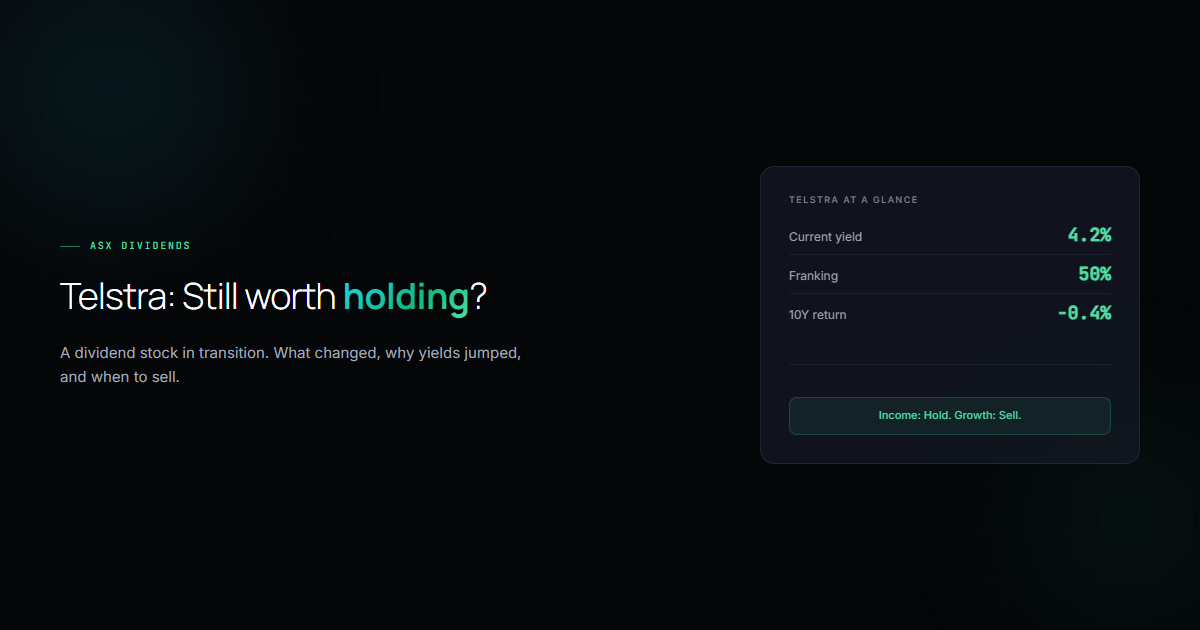
But the “set-and-forget” case for TLS is under pressure. The dividend was cut sharply during the NBN transition and has only partially recovered. Term deposit rates have risen meaningfully since 2022, narrowing Telstra’s yield advantage for lower-risk investors. Whether TLS still earns its place depends on your tax position, your income goals, and how you weigh yield against growth potential.
How much is Telstra dividend?
Headline Yield vs Gross Yield
At a recent A$4.89, you’ll find a 4.21% forward yield equating to roughly 21 cents per share (cps) annually. That headline figure understates the real return for Australian investors.
Because Telstra dividends carry franking credits, the effective pre-tax return is higher. With dividends approximately 90 to 100% franked, the gross dividend including the 30% corporate tax credit is approximately 30 cps, giving a gross yield near 6.1% at current prices.
For an investor on a 30% marginal rate, the franking credit offsets most of the tax liability on that income. For an SMSF in accumulation phase paying 15% tax, surplus credits reduce other tax. For a pension-phase SMSF paying 0% tax, the credit is typically refunded in full by the ATO.
Dividend Payment Schedule
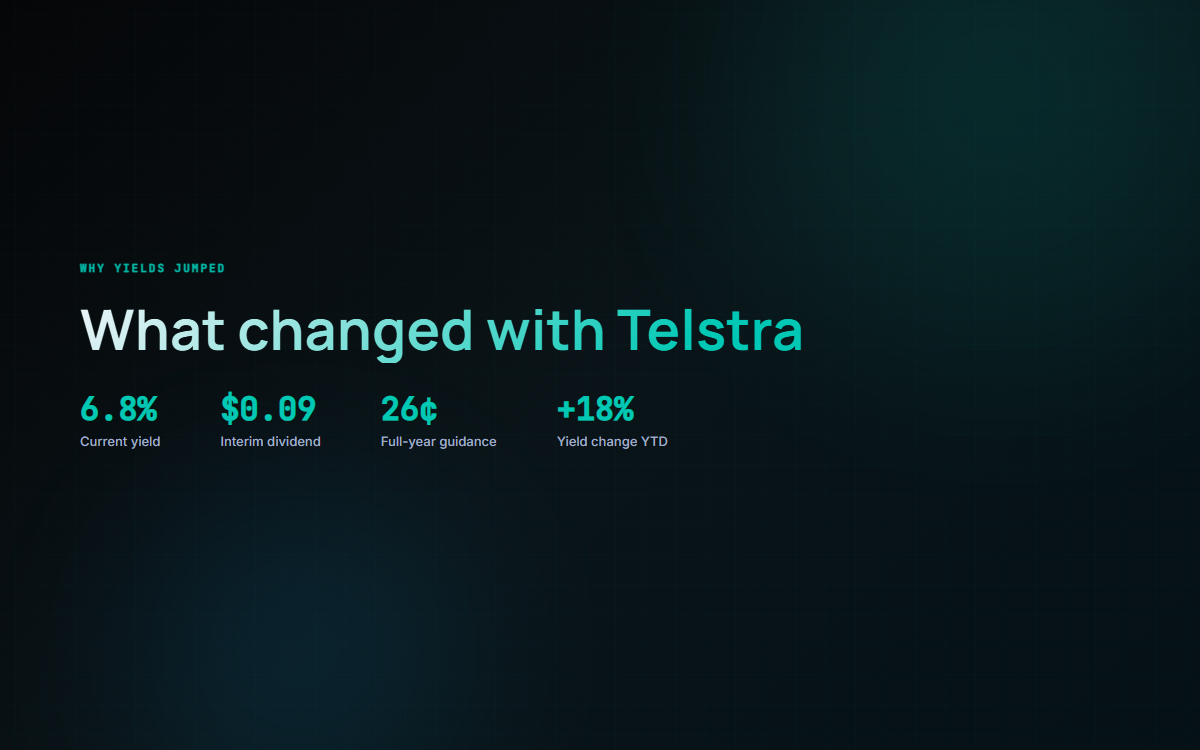
Telstra pays dividends twice per year: an interim instalment around March and a final around September. The interim payment for early 2026 was approximately 10.5 cps. Investors must hold shares before the ex-dividend date to receive each payment.
What is Telstra dividend?
At its peak, Telstra paid 28 cps per year, supported partly by NBN infrastructure payments. As those payments wound down and competitive pressure increased, the board cut the dividend substantially. Under the T22 strategy, Telstra simplified its structure and reset its cost base, stabilising the dividend at a lower level — not recovering to prior highs.
| Financial Year | Approximate DPS (cps) |
|---|---|
| FY2020 | 16 |
| FY2021 | 16 |
| FY2022 | 16.5 |
| FY2023 | 18 |
| FY2024 | 19 |
| FY2025 (est.) | 21 |
Three-year dividend growth clocks in near 30% off the reset base. The starting point was already well below historical levels, in case you missed it.
Is Telstra’s Dividend Sustainable?
Telstra’s payout ratio relative to earnings per share is approximately 128.6%. On an accounting earnings basis, the dividend exceeds what the company earns — which warrants scrutiny before assuming further growth.
Accounting earnings include non-cash items like depreciation and amortisation, which are large for a capital-intensive telco. Telstra’s free cash flow provides a more useful coverage measure and has been sufficient to support the current dividend, but headroom is limited and capital expenditure requirements remain high.
If you hit the T25 targets for EBITDA growth and improved free cash flow conversion, moderate dividend growth from the current base is plausible. If you miss them, maintaining 21 cps becomes the more likely outcome than growing it.
Does Telstra pay dividends?
Under Australia’s dividend imputation system, Telstra pays company tax at 30% before distributing dividends. That tax becomes a franking credit attached to each dividend. Investors include both the cash dividend and the credit in assessable income, then apply the credit against their tax liability.
| Tax Rate | Headline Yield | Effective After-Tax Yield (approx.) |
|---|---|---|
| 0% (pension SMSF) | 4.21% | ~6.1% (full credit refund) |
| 15% (SMSF accumulation) | 4.21% | ~5.5% |
| 30% (individual) | 4.21% | ~4.2% |
| 45% (high income) | 4.21% | ~3.8% |
The franking advantage is greatest for SMSFs in pension phase. A pension-phase SMSF pays 0% tax on income, so the full 30% franking credit is refundable as cash. On a 21 cps dividend with 100% franking, the fund receives approximately 9 cps in franking credit refunds, lifting the effective yield to around 6% or above.
Telstra’s Dividend Reinvestment Plan: Opportunity and CGT Complexity
Telstra offers a Dividend Reinvestment Plan (DRP) allowing shareholders to receive additional shares instead of cash. Elections are made through the share registry before the relevant ex-dividend date, with shares typically issued at a small discount to market price.
Electing into the DRP does not defer tax on the dividend. The cash dividend remains assessable income in the year received, and franking credits still apply. Each parcel of shares issued under the DRP is treated as a separate CGT asset with its own cost base equal to market value at issue. Parcels held for more than 12 months by individuals or trusts qualify for the 50% CGT discount.
Accurate records must be kept for every DRP parcel: issue date, number of shares, and cost base. Over many years of reinvestment, this creates dozens of separate parcels. Investors who fail to track these accurately often face errors when reporting capital gains. Crowdfolio is built for Australian DIY investors and records each DRP parcel with its own cost base, keeping your CGT position ATO-ready across each financial year.
How Telstra’s Yield Compares
TLS vs ASX Big Four Banks
| Stock | Approx. Headline Yield | Franking |
|---|---|---|
| TLS.AX | ~4.2% | 90–100% |
| CBA.AX | ~3.2% | 100% |
| NAB.AX | ~4.8% | 100% |
| WBC.AX | ~5.1% | 100% |
| ANZ.AX | ~5.5% | 100% |
On gross yield, you’ll see Telstra match CBA but trail the major banks. Their earnings carry more cyclicality; Telstra’s are defensive but face structural pressure from competition.
Telstra vs Term Deposits
Term deposit rates for 12-month terms have moved to the 4.5% to 5.2% range since 2022. On a headline basis, term deposits now rival Telstra’s cash yield without the equity risk. For investors outside superannuation, franking credits restore Telstra’s competitiveness — but the comparison is closer than it was pre-2022.
How Telstra’s Franked Yield Compares for Income Investors
For SMSFs in pension phase, Telstra’s fully franked dividend is difficult to replicate in terms of after-tax yield per unit of risk. The limitation is concentration: a large position in a single telco introduces sector-specific regulatory and competitive risk.
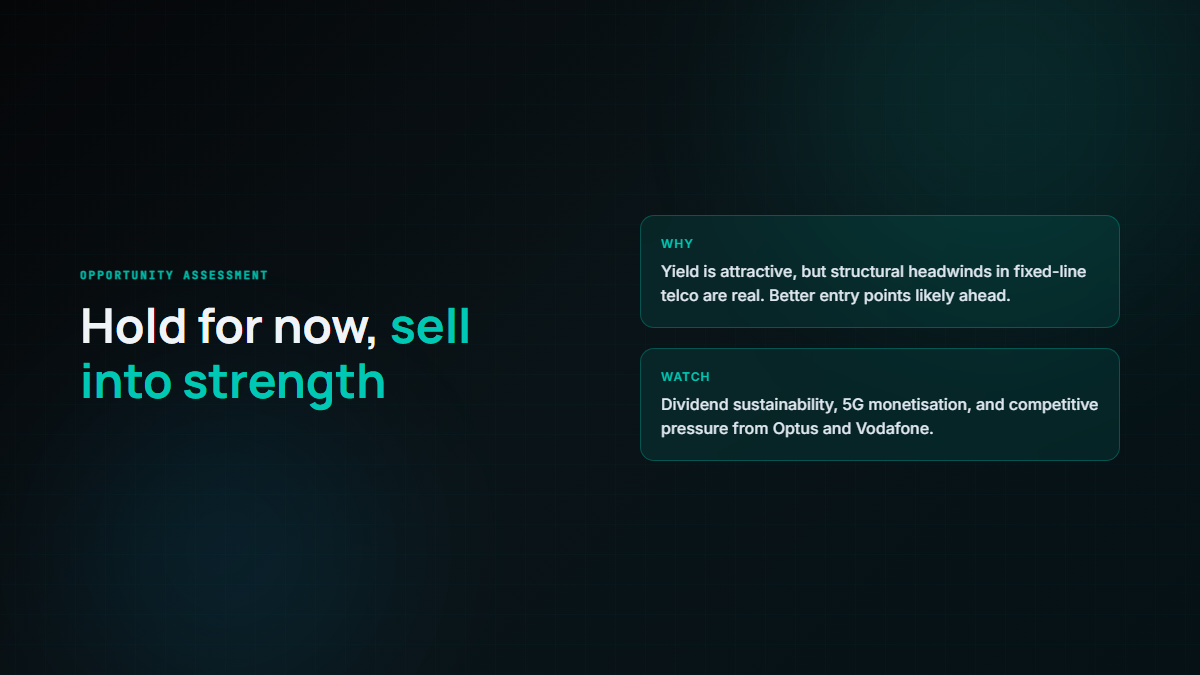
Retirees prioritising income over capital growth will find TLS’s predictable bi-annual payments and high franking appealing. Those seeking total return should note the share price has delivered limited capital appreciation over the past decade, and the reset dividend baseline sits materially below the stock’s historic income profile.
Telstra belongs in an income portfolio as one holding among several, paired with diversified income sources such as bank stocks, listed investment companies, or infrastructure names. Treating it as the primary income anchor concentrates risk in one sector without sufficient earnings growth to justify that reliance.
Frequently asked questions
What is Telstra’s current dividend yield on the ASX?
Telstra’s forward dividend yield is approximately 4.21% at recent share prices, based on annual dividends of around 21 cps paid in two instalments.
Are Telstra dividends fully franked in 2024–2025?
Recent Telstra dividends have carried franking of approximately 90 to 100%, making them substantially fully franked for Australian resident investors.
Has Telstra cut its dividend in recent years?
Yes. Telstra cut its dividend significantly during the NBN transition from a historical high of 28 cps. The current ~21 cps represents a stabilised reset, not a return to prior levels.
Is Telstra a good income stock for an SMSF in Australia?
For SMSFs in pension phase, Telstra’s fully franked dividend generates refundable franking credits that materially lift the effective yield. The stock suits SMSFs seeking defensive income, provided it is held as part of a diversified income strategy rather than as the primary holding.